
Rare Voices
Oxford-Harrington Rare Disease Centre Project Brings Renewed Hope for CASK Treatments
July 14, 2026
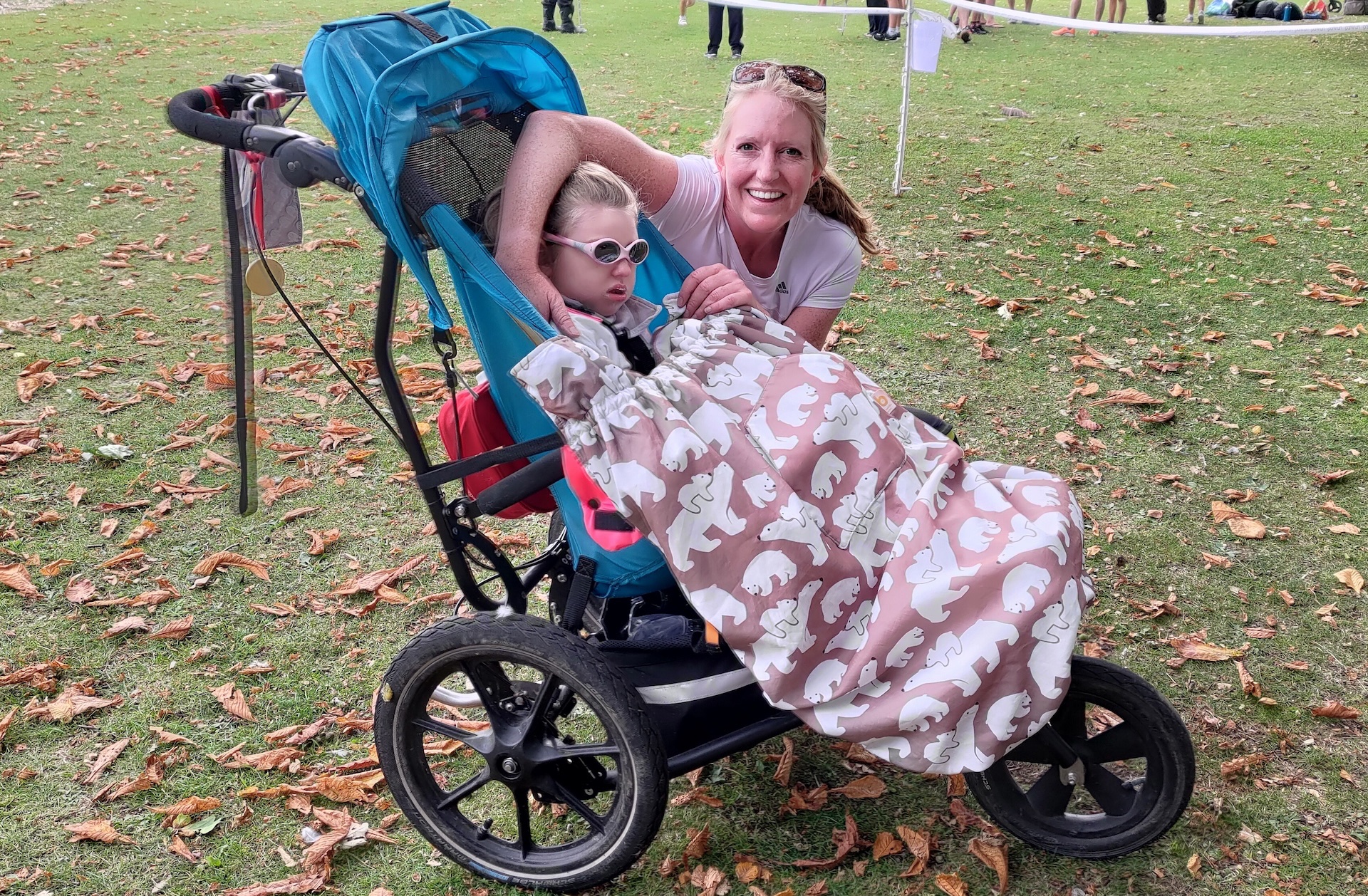
When Laura Hattersley’s daughter Sarah was diagnosed with an ultra-rare CASK-related disorder at just 13 months-old, her family was told that there were no targeted treatments for CASK.
CASK-related disorders are rare neurodevelopmental conditions caused by mutations in the CASK gene. They can lead to epilepsy, developmental delay, intellectual disability, impaired mobility and brain function.
Laura’s daughter was further diagnosed with MICPCH (Microcephaly with Pontine and Cerebellar Hypoplasia) disorder, a subgroup of CASK-related disorders and a more severe form of the disease. MICPCH results in parts of the brain stem and cerebellum not growing properly.
Today, treatment of CASK is limited to managing symptoms through anti-seizure medication and physical, occupational and speech therapies. There are currently no disease-modifying treatments.
Laura says, “I’ve discovered doctors just tell you about the present situation and don’t offer up any hope or any encouragement to find a way forwards and improve things for the future. It didn’t occur to me until three years later to actually consider pushing for a curative treatment.”
Instead of giving up, Laura became part of the movement to change that future. Today, she is Director of the CASK Research Foundation, where she works with families and researchers around the world to accelerate research into new therapies.
One of those researchers is Dr Mingshan Xue, a neuroscientist at Baylor College of Medicine and an Oxford-Harrington Rare Disease Scholar.
Dr Xue's research is focused on developing a gene replacement therapy that addresses the root cause of CASK-related disorders by restoring a functional copy of the CASK gene. Through the Oxford-Harrington Rare Disease Scholar Award, his team is receiving funding alongside expert therapeutics development support to help move this promising approach towards clinical development.
"Our goal is to develop a disease-modifying genetic therapy that targets the root cause of CASK-related disorder," says Dr Xue. "The OHC research program focuses on obtaining the proof-of-concept of this therapeutic approach using mouse models of CASK-related disorder. For us, the drug development support is most important.”
When Laura Hattersley first met Dr Xue, she had been told by experts that gene replacement therapy was unlikely to be feasible for MICPCH. It was not until late 2023 that she learned about his gene therapy programme.
"It was very emotional for me to see preliminary evidence that aspects of MICPCH might be reversible, even after infancy," Laura says. "Dr Xue's data gave me renewed hope that the health and outcomes of our children could be improved."
For Laura, the potential impact goes far beyond scientific progress.
"For me personally, a treatment represents my daughter potentially being free from the seizures that wake her nearly every night. It represents hope that Sarah will retain her smile and joy, which seem to be fading."
As Director of the CASK Research Foundation, she also sees what hope means for newly diagnosed families, who often experience high levels of distress due to the difficulty in managing CASK-related symptoms, such as intractable epilepsy and lack of sleep for both carer and child.
She says, “By treating the root cause of MICPCH with gene replacement there is a real possibility that whatever physiological function is causing symptoms like these, and more, will be resolved.”
On CASK Awareness Day, Laura believes that possibility is worth celebrating.
"I can never thank Dr Xue enough for believing in and supporting our ultra-rare disease."
While much work remains before a therapy reaches patients, projects like Dr Xue's demonstrate what becomes possible when researchers, clinicians, patient organisations and the Oxford-Harrington Rare Disease Centre work together to accelerate treatments for rare diseases.