

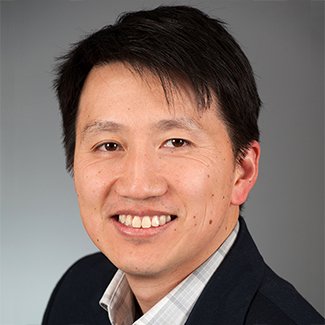
Timothy Yu, MD, PhD
Associate Professor at Boston Children’s Hospital and Harvard Medical School, and Associate Member of the Broad Institute
United in Our Mission to Cure Rare Disease
Timothy Yu, MD, PhD
2024 Oxford-Harrington Rare Disease Scholar
Individualized genetic therapy for a rare neurometabolic disorder (PEX1 Zellweger Syndrome)
Timothy Yu, MD, PhD thrives on connecting elegant biology, science, and chemistry to help patients facing extreme life challenges. With support from the Oxford-Harrington Rare Disease Centre (OHC), this pioneer in individualized genomic medicine is working to develop a therapeutic for PEX1 Zellweger Syndrome Disorder (ZSD).
About 80 ZSD babies are born in the US each year. Infants may have facial deformity, impaired vision and hearing, slow physical and mental development, seizures, and other issues. Many do not live beyond one year. For those with minor symptoms who live into childhood – even adulthood – treatment is limited to management.
“To help rare disease patients, we are using antisense oligonucleotides, or ASOs, to correct how genes are spliced or joined together,” Dr. Yu says. “The genome is like a book with scattered fragments of information pieced together to make a functional gene. When mutations disrupt this process, we can use ASOs to try to correct the problem at the source and help patients.”
In diseases caused by defective recessive genes, such as ZSD, this approach can be used to prevent disease progression, he notes.
The OHC project extends a series of clinical trials of patient-customized medicines Dr. Yu and his team have been advancing over the past six years. Each iteration refines the process of getting these treatments to patients faster and, ultimately, applying what they’ve learned more broadly.
“A lot of people refer to this as a ‘hyper-individualized’ strategy,” Dr. Yu says. “Technically, that’s correct. But at the same time, it’s important not to lose sight of the real goal – to create common and repeatable ways of applying these interventions so they may be used to help many people.”