
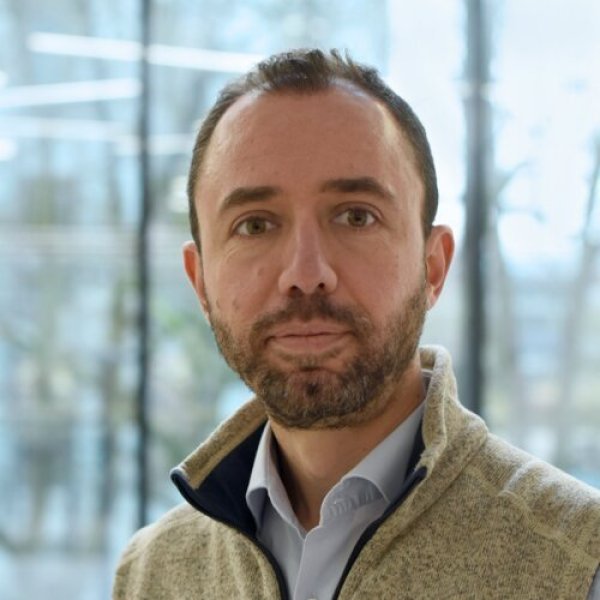
Carlo Rinaldi, MD PhD
Professor, Molecular and Translational Neuroscience
University of Oxford
Turning the Switch on Spinal and Bulbar Muscular Atrophy
Disease Area
Neurological
Focus
An isoform-switch oligonucleotide therapy for spinal and bulbar muscular atrophy
Scholar Profile
Spinal and Bulbar Muscular Atrophy (SBMA) is an inherited adult-onset neuromuscular disorder affecting 1 in 40,000 men worldwide. In this condition, specialized nerve cells controlling skeletal muscular movement degenerate gradually. Arm and leg muscles weaken and atrophy, and patients become wheelchair-bound within 15 to 20 years of onset. No cure exists for the fatal disorder—today’s drugs relieve symptoms only.
SBMA is caused by a DNA mutation resulting in a pathological expansion in a cytosine-adenine-guanine (CAG) repeat in a gene called the Androgen Receptor (AR). This defect sets off a pattern that disrupts the motor unit functioning.
Dr. Rinald is testing an innovative approach based on splice-switching oligonucleotides (SSOs) to silence the mutant AR while promoting the production of an alternative, harmless AR isoform. His goal is to restore patient strength and mobility.
“The CAG segment normally repeats up to 36 times, but in SBMA individuals, the repeat is longer, typically 40 or more,” Dr. Rinaldi explains. “The encoded AR protein containing the extra segments results in toxic protein functions, which ultimately damage motor neurons and muscles. The patient progressively loses muscle strength and mobility. To reduce the mutant AR protein toxicity, our approach employs an antisense oligonucleotide switch to promote expression of an AR isoform (AR2)—a closely related, harmless protein— at the expense of the canonical isoform. AR2 acts as a decoy in the transcription process and restores normal nerve and muscular functioning.”
Dr. Rinaldi and his team are screening and validating SSOs in patient-derived cells, as well as performing in vivo tests in SBMA mouse models to identify lead candidates for a novel genetic therapy.
“Our goal is to transform the SBMA landscape and bring real hope to patients.”