
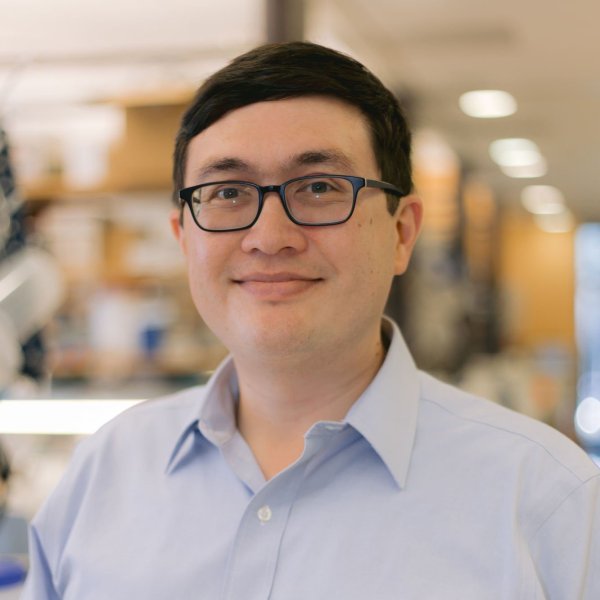
Michael Pacold, MD, PhD
Assistant Professor of Radiation Oncology
NYU Langone Health
Rescue for HPDL-Driven Mitochondrial Disorders
Disease Area
Neurological
Focus
Treating HPDL Encephalopathies with CoQ10 Headgroup Intermediates
Scholar Profile
In the United States, about 200 babies and young children have been diagnosed with rare, genetic HPDL-driven mitochondrial disorders. Parents watch, heartbroken, as their offspring exhibit delayed development, epileptic seizures, muscle spasms, or even die without a cure. Now, an effective therapeutic, and possibly a cure, is within reach. A first-in-human treatment developed by Oxford-Harrington Rare Disease Centre scholar, Michael Pacold, MD, PhD, restored mobility and playfulness—in just two months—to an eight-year-old boy suffering rapid decline.
“His parents previously had lost two children to HPDL encephalopathy,” Dr. Pacold recalls. “When it appeared their one surviving child was heading that way, they were terrified.”
The boy’s experimental treatment stems from a 2021 study conducted by Robert S. Banh, PhD (then a postdoctoral fellow in Pacold Lab), tracing the path of oxygen in cellular metabolism. The work shed new light on molecular pathways inside the mitochondria—the cell’s energy generator involving the HPDL protein, its metabolites, and Coenzyme Q10, whose synthesis is lost in HPDL deficiency.
As a 2023 Harrington Discovery Institute scholar, Dr. Pacold targeted the HPDL pathway in pancreatic cancer. Then, the first reports of patients with neurologic diseases caused by loss of HPDL were published. The Pacold team quickly obtained HPDL-deficient mouse models that mimicked HPDL-deficient patients and which responded to HPDL-produced metabolites, achieving stunning results with virtually no toxicity. Next, a unique partnership with pediatric neurologists, Claire Miller, MD PhD and Giuletta Riboldi, MD, PhD, also at NYU Langone, enabled FDA approval of single treatment and compassionate care for a child with HPDL deficiency. A larger study to test the approach is planned.
“Miraculous recovery is rare, but that's what we strive for in science.”