

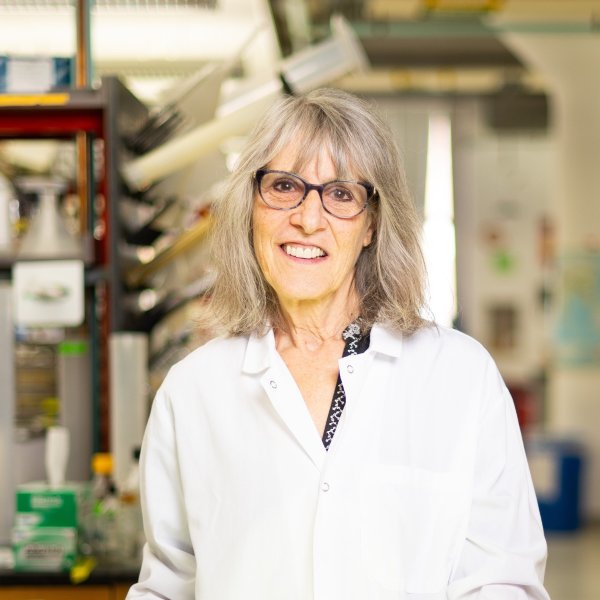
Michele Jacob, PhD
Professor, Director of Biomedical Therapeutics PhD program
Dept. of Neuroscience Tufts University School of Medicine
Hope for Children with CTNNB1 Syndrome
Disease Area
Neurological
Focus
Identifying a lead compound for efficacious treatment of CTNNB1 syndrom
Scholar Profile
Babies born with the rare genetic disorder, CTNNB1 syndrome seem fine at first. Then, parents notice they don’t hit developmental milestones (babbling, crawling, sitting up, walking). Mobility and cognitive impairments often put them behind in school and many require life-long caretaking. Dr. Jacobs has met some of the parents and understands their heartache. Having proof-of-concept data demonstrating therapeutic effectiveness of a small molecule compound in CTNNB1 mouse and human cell models, she aims to identify a lead drug candidate for clinical trials.
“Currently, there are about 500 diagnosed CTNNB1 cases worldwide,” Dr. Jacob says. “CTNNB1 syndrome, first identified as a genetic disorder in 2012, requires genetic testing for definitive diagnosis. More testing is expected to increase the number of CTNNB1 cases.”
The disorder results from sporadic loss-of-function mutations in the CTNNB1 gene, which encodes for beta-catenin, an essential protein for nervous system function. As one CTNNB1 gene allele is mutated, beta-catenin levels are about half of what they should be. Normalizing beta-catenin levels provides a therapeutic opportunity for this unmet medical need.
In collaboration with Broad Institute and a NIH innovation accelerator hub, Dr. Jacob is identifying a lead therapeutic compound. Her drug studies in a preclinical mouse model show that the compound, BRD0320, a high selectivity inhibitor of the endogenous negative regulator, glycogen synthase kinase 3 (GSK-3), significantly normalizes b-catenin levels and cognitive and motor phenotypes – even with treatment initiated after symptom onset.
“With Oxford-Harrington Rare Disease Centre input and support, we are conducting essential CTNNB1 patient derived neural cell studies of GSK inhibitor lead candidates,” Dr. Jacob shares. “The results are extremely encouraging!”
“Seeing a mother’s tears made me determined to help.”