
Feature
Alström Syndrome with Kerry Leeson-Beevers
February 12, 2025
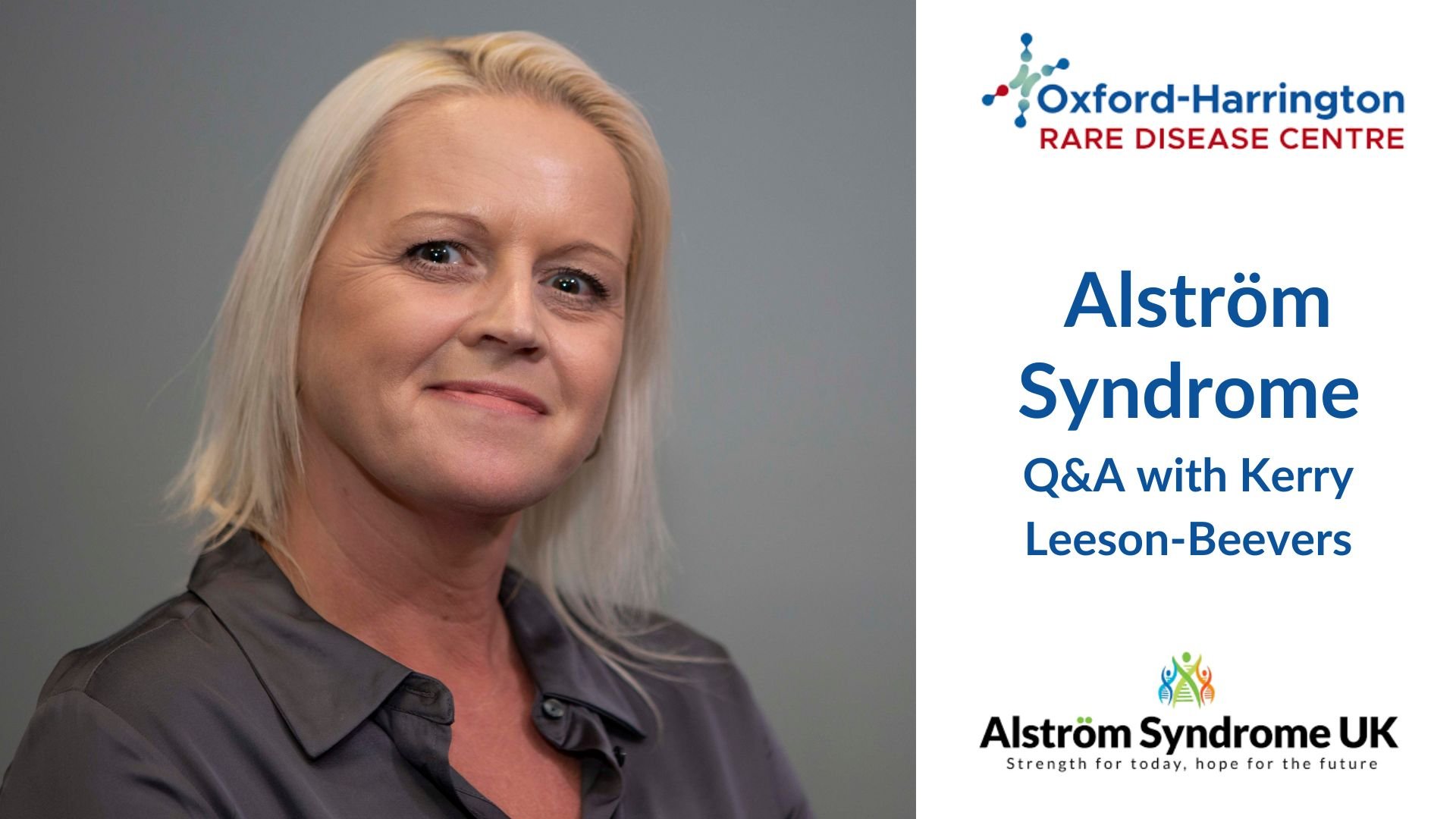
Ahead of Rare Disease Awareness Month, we sat down with Kerry Leeson-Beevers, Chief Executive of the charity Alström Syndrome UK (ASUK). Read on to learn about Kerry's personal journey as a parent to a child with the condition and her work to improve access to services for affected families.
How did Kerry's journey with Alström Syndrome begin?
Kerry Leeson-Beevers: My son Kion was born in 2001. Despite the normal pregnancy and normal birth, at three weeks old, he collapsed and went into heart failure. We did not realise how serious it was at the time, but he was rushed to intensive care.
After an initial recovery, at four months old, Kion collapsed again due to heart failure and returned to intensive care, where he was diagnosed with dilated cardiomyopathy. Later, he was also diagnosed with a visual impairment. The fact that two major organs were affected within Kion's first year prompted a referral to genetics.
Soon after, Kerry attended a charity fundraiser for two boys with Alström Syndrome and met their families, who advised her to contact Alström Syndrome UK. After reaching out to the charity, Kerry and Kion were connected with a professor at Birmingham Children's Hospital, who diagnosed Kion with Alström syndrome.
KLB: It was difficult to come to terms with a condition like this because, at the time, there was very little information out there, and what was online was negative. I had to learn and come to terms with the fact that Alström is a life-limiting condition. But I had already had a child who was in heart failure and was just relieved that he managed to make it through that. So, every day was a bonus.
How did Kerry get involved with the charity Alström Syndrome UK?
KLB: I got involved with the charity as a parent at first. I soon joined the board and became the chair of trustees, which was a voluntary role.
At the time of diagnosis, Kerry had to give up work to take care of her son with the support of her family. In 2003, she became Alström Syndrome UK's family support worker.
KLB: We noticed at that time that there was very little diversity within the Alström community. The majority of people diagnosed were white British, and Alström is a recessive condition. We know that within communities that marry close-blood relatives, there is an increased chance of having children with a recessive condition. So, we wondered if there were children out there who had a diagnosis of Alström but were not accessing our services for whatever reason.
After working to make ASUK's services more inclusive and more accessible to people of different ethnic backgrounds, the charity saw the demographics of the Alström community change drastically over the years. Over 55% of Alström members now are from an ethnic minority.
KLB: In my time with Kion, I have had to battle, and I mean battle, health, education, social care, the benefits system, and it has been a real challenge to make sure that Kion gets the support and the healthcare services and other services that he should be entitled to. I did not want other families to have to go through all those challenges.
Kerry became the charity's Chief Executive in 2021. She is also a patient representative on the England Rare Diseases Framework Delivery Group and a co-applicant in various NIHR-funded research studies.
What are the key challenges faced by patients with Alström and their families?
KLB: One of the most challenging things for parents, children and adults as they get older is the uncertainty of living with a condition that is life-limiting. You are presented with a list of these conditions and things that could potentially happen at some point, but you do not know if they are going to happen to you or when they are going to happen to you or your child.
Alström syndrome is an ultra-rare genetic condition and affects about 92 people in the UK, with a prevalence of 1 in 1,000,000. Diagnosis is challenging but slowly improving due to advancements in genetic testing. Early symptoms often include visual impairment and heart failure, though not all cases lead to early genetic testing.
KLB: Another challenge is getting the right services and support in place. Even in the UK now, sometimes it is very much a postcode lottery. There are over 8,000-10,000 rare conditions now, and you cannot expect every healthcare professional to understand everything about a rare condition.
Often, parents of children with the condition become full-time care coordinators and are not able to stay in work. Due to their symptoms, children need specialist support for education and coordinated medical care. Because of this, they often feel isolated and do not have the same opportunities as their peers.
What support does Alström UK provide for affected patients and families?
KLB: We have a family support service with two Care Coordinators, a Wellbeing Coordinator and a Transition Coordinator. We are fortunate to have a highly specialised service for people diagnosed with Alström syndrome. We work in partnership with Birmingham Women’s and Children’s Hospital and Queen Elizabeth Hospital, Birmingham to help coordinate multi-disciplinary clinics and provide support. We get to know our families very well.
We get to know their own individual, specific needs. Within a community of 92, as I said, 55% are from an ethnic minority, and families speak 17 different languages within our small community. So, we must be very aware of the additional support needs and things people might need.
ASUK's team will be present to support the families through their clinics and help coordinate the provision of care. The charity also provides grants for exercise, adult empowerment grants, advice with education, healthcare plans, training to schools, peer-to-peer support, and contribute to social care assessments. A member of the team is also qualified to carry out deafblind assessments that meet Care Act requirements.
KLB: Transition is a critical time for people with rare conditions. For Alström, it is a time when symptoms are progressing, and there are additional health risks through puberty. But also, it is a time when families are moving from service to service. So, some families describe moving from paediatrics to adult care as falling off a cliff.
This is why ASUK has developed T-KASH (Transition-Knowledge And Skills in Health) — a free resource for understanding transition in health settings. The charity has a Transition Coordinator and developed the transition package to help young people prepare for adulthood.
ASUK also offers wellbeing support run by a trained counsellor and Social Worker with lived experience of Alström Syndrome.
KLB: Our Breaking Down Barriers network has now grown to over 70 organisations that are looking to improve to develop inclusive and accessible services for all families living with rare and genetic conditions. While Alström is such a small community, we also work more broadly within the rare disease community. We are involved in rare disease policy, rare disease research, and patient and public involvement and engagement.
What are your hopes for the next five years, and are there any future developments on the horizon?
KLB: We think some developments such as gene therapy in other related conditions could potentially support Alström in the future. More broadly, this year, there has been a lot of investment in rare diseases. We are part of the LifeArc Centre for Acceleration of Rare Disease Trials in Birmingham, and our role is to support patient and public involvement and to make sure the voices of people with lived experience are at the centre of new developments. Hopefully, this will benefit Alström and the wider rare disease community.
Kerry also mentions that the rare disease community puts more importance on equity and equality, diversity and inclusivity (EDI) than before.
KLB: Hopefully, there are going to be a lot more positive steps taken to reduce the health inequalities and additional barriers that people with rare conditions and their families may face.
We also need to be very realistic in terms of funding and resources. We are a charity, and we constantly need to make sure that we get the resources we need to continue our services. It is a difficult time, but it is encouraging to see new initiatives being developed. There is much more known about rare conditions and much more investment into the importance of developing things further.
Alström Syndrome is an extremely complex condition. Visit the ASUK website for an overview of the symptoms, management, clinical guidelines and support available for people diagnosed, family members and health professionals www.alstrom.org.uk