News
Highlights from Rare Disease Day 2026
March 02, 2026
The Oxford-Harrington Rare Disease Centre (OHC) marked Rare Disease Day 2026 with a series of events, media features and expert discussions highlighting advances in rare disease research and therapy development to advance its mission of accelerating the discovery and development of new, life-changing medicines for patients with rare diseases
Lighting Up Oxford and Cleveland for Rare Disease Day
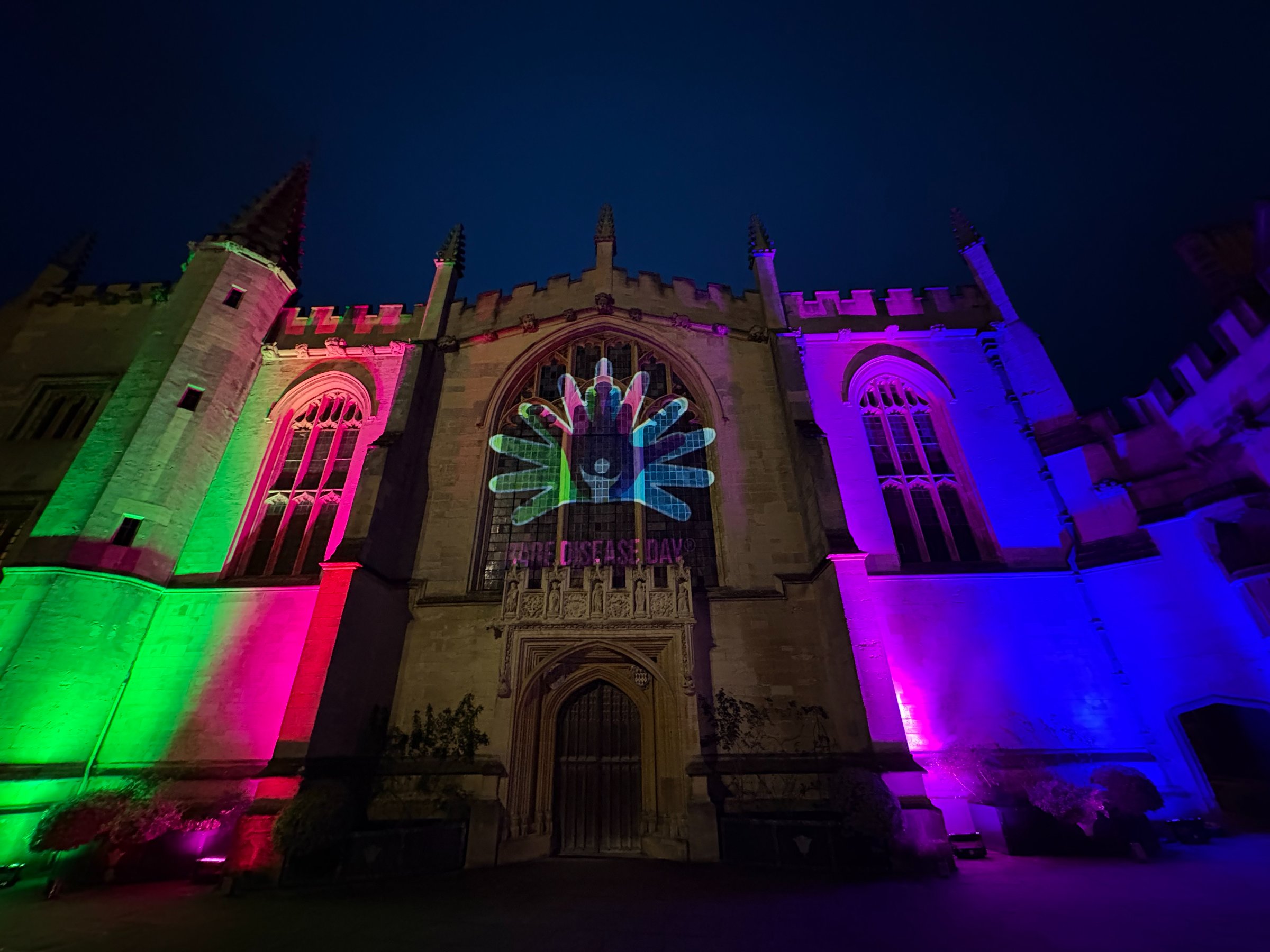
Rare Disease Day 2026 was marked with illuminations in Oxford and Cleveland, which underscored the transatlantic partnership at the heart of the Oxford-Harrington Rare Disease Centre (OHC) formed between the University of Oxford and Harrington Discovery Institute in Cleveland, Ohio.
Magdalen College Chapel on Oxford’s High Street and Cleveland's Terminal Tower were lit in green, pink, blue and purple as part of the global Chain of Lights initiative.
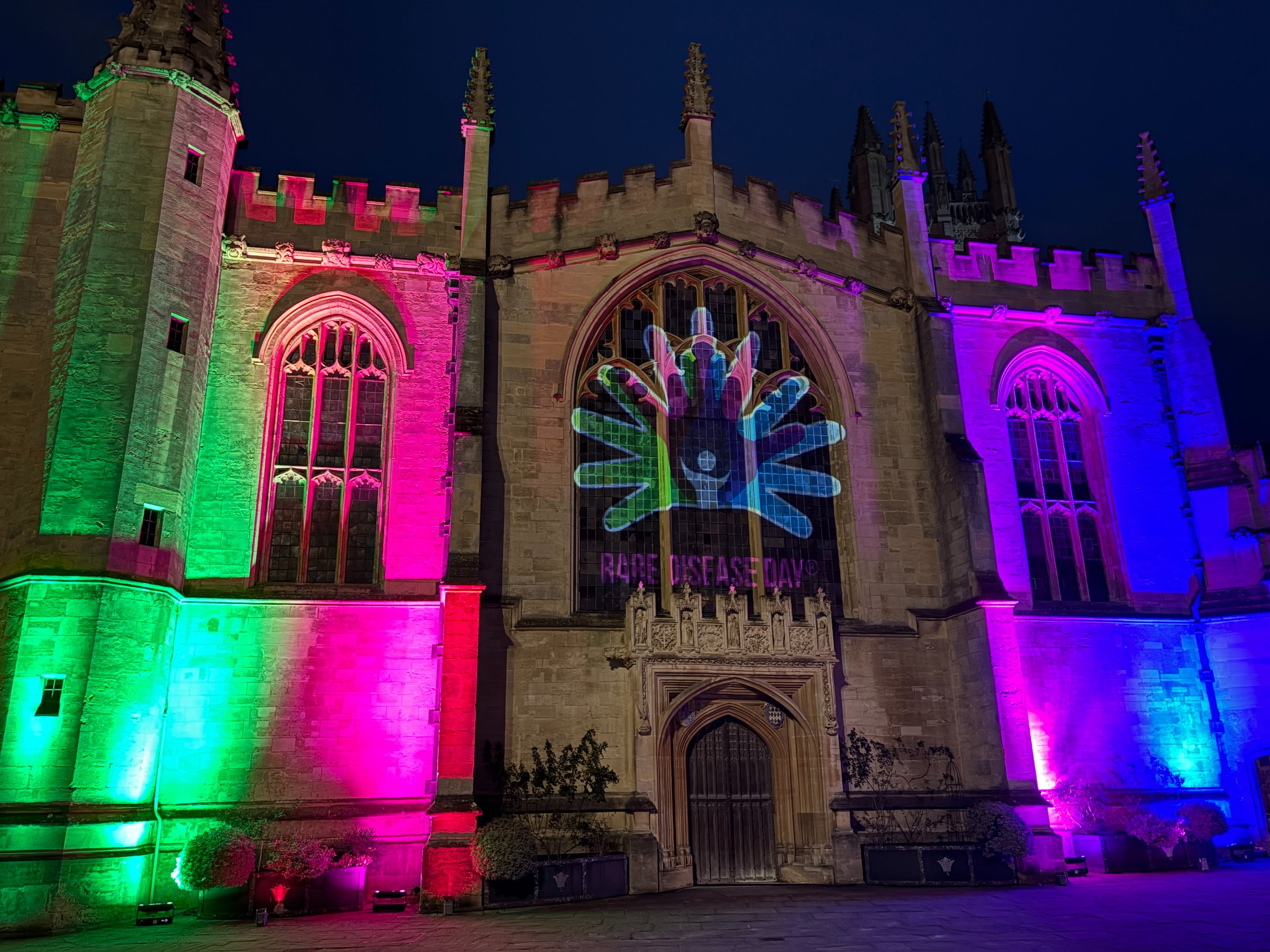
Magdalen College, Oxford
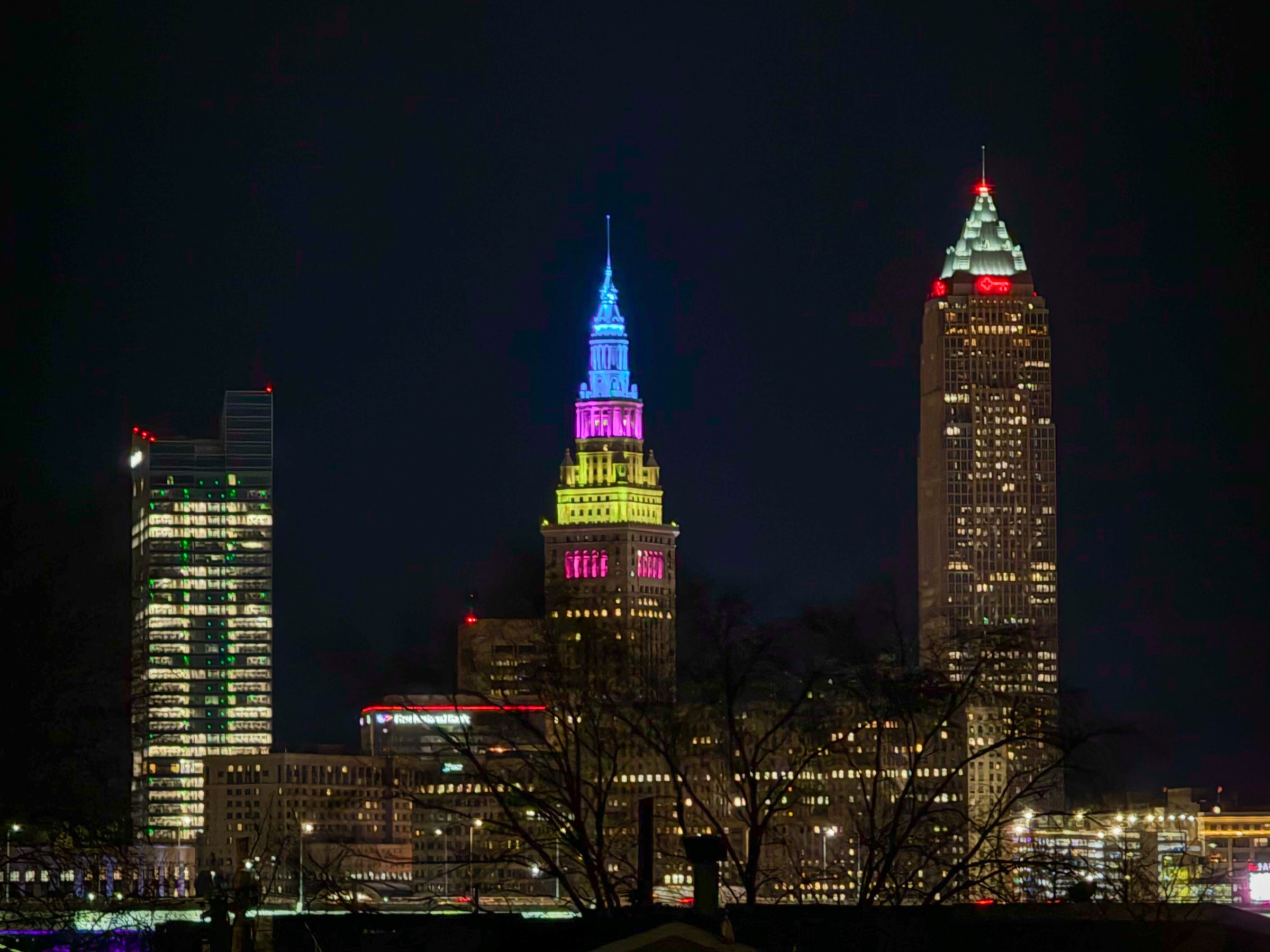
Terminal Tower, Cleveland, Ohio
A Turning Point for Rare Disease
In a deeply personal account in The Telegraph, David Cameron, Chair of the OHC Advisory Council, reflected on the loss of his son Ivan to a rare neurological condition and the dramatic transformation currently underway in rare disease research and drug development.

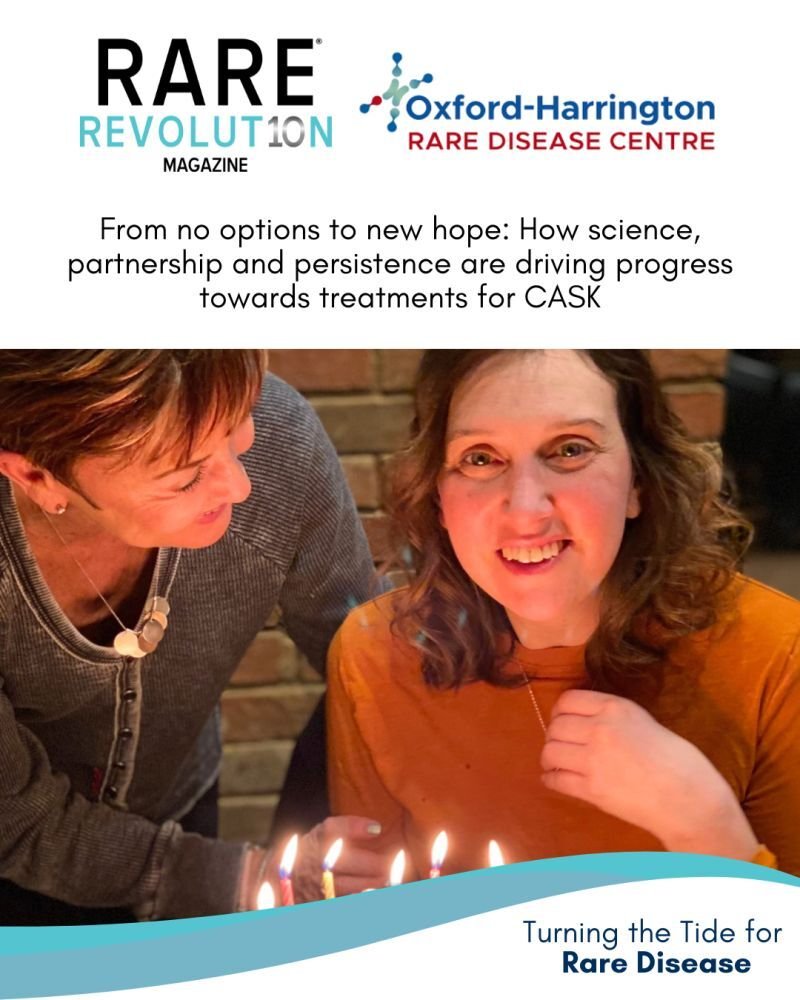
From No Options to New Hope: Advancing Gene Therapy for CASK
In Rare Revolution Magazine, OHC Director Matthew Wood and Co-Director Matthew P. Anderson highlight how science, partnership and persistence are driving progress toward treatments for CASK, a rare neurodevelopmental disorder.
The article centres on Cynthia Schulz and her daughter Noelle (“Noni”), who lived decades without a diagnosis or treatment pathway. Today, thanks to genetic advances and the partnership of the OHC, new hope is emerging.
Through the OHC Scholar Award programme, OHC is supporting proof-of-concept work and providing drug development expertise to help move this promising CASK therapy toward clinical application.